Games in Children's Language Education
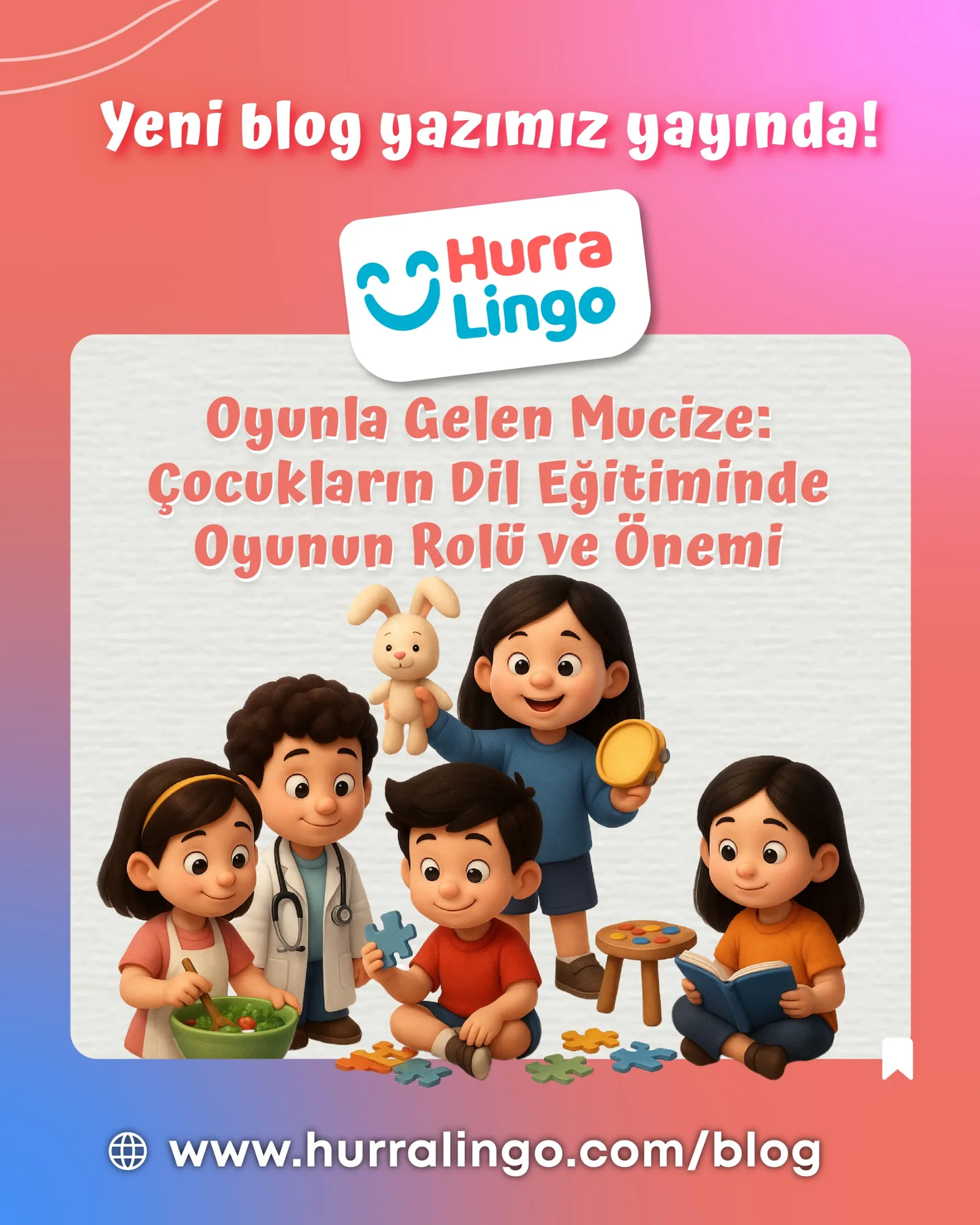
Games in Children's Language Education
Imagine that moment when your child bursts out laughing and says a new word. Or the long sentences he uttered during a house game he played with his friends... These moments are the most natural and effective form of language education. So, how does the game, which seems to be just an entertainment tool for children, support language development so strongly?
Modern educational approaches frequently emphasize the central role of play in children's cognitive, social and emotional development. Especially language education at an early age When it comes to learning, play is not a luxury but the cornerstone of the learning process. Let's examine together the contributions of this magical world of the game to language development.
Why Game? Why Is It So Critical For Language Development?
Play is a laboratory where children make sense of the world, experiment and reinforce what they have learned. From a language education perspective, this laboratory is invaluable.
A Natural and Stress-Free Learning Environment
Instead of trying to memorize words with cards at the table, using that word in a game is much more permanent. During play, children do not feel pressure to “learn”. This stress-free environment allows them to try new words and sentence structures without fear or hesitation. Language develops spontaneously in this natural flow.
Vocabulary Enrichment
Consider a market shopping game. During this game, the child hears and uses dozens of words such as "apple", "tomato", "money", "get", "give". While playing with cars, use adjectives such as "fast", "slow", "red", "big"; While taking care of their babies, they learn verbs such as "hungry", "sleep", "love". Each game opens the door to a new world of words.
Social Skills and Communicating
Play, especially group games, teaches children the basic rules of communication:
- Queue waiting: He learns to wait his turn to speak.
- Listening: Actively listens to understand what his friend is saying.
- Expressing an opinion: It expresses what you want to do in the game.
- Problem solving: He tries to resolve disagreements by talking.
These skills are basic communication abilities that they will use not only for the game, but throughout their lives.
Supporting Creativity and Imagination
Games where a cardboard box is a spaceship and a stick is a magic wand are the moments when language is used most creatively. While creating imaginary scenarios, children stretch their language, create new sentences and develop their abstract thinking skills. This process directly feeds their ability to express themselves.
Game-Based Language Development Activities You Can Do at Home
You don't need expensive toys or complicated activities to support your child's language development. Here are a few suggestions that you can easily make with ingredients at home:
- House and Role Playing Games: Games such as being a doctor, a teacher, or a cook enable children to learn dialogues in different roles.
- Word Hunt: A game of finding objects around the house that start with a certain color or letter is great for increasing vocabulary.
- Nursery Rhymes and Songs: Rhythm and repetition make words easier to remember. Singing songs and learning rhymes together is both fun and educational.
- Box Games and Puzzles: Simple board games develop skills such as understanding instructions and telling colors and numbers.
- Storytelling: Looking at a picture together and making up a story about that picture strengthens your child's ability to form sentences and sequence events.
In Conclusion…
In children's language education The game is not an "intermediate activity" but the process itself. Playing games doesn't just help your child have fun; It also helps him become an individual who has a richer vocabulary, expresses himself better, knows how to listen and has strong social communication skills.
Remember, every play hour you spend with your child is the most valuable investment you make in his or her language development. Let them play, talk and discover the magical world of language with laughter!
 Free Trial Lesson